Research question
As a violinist, I wanted to understand which measurable structural and acoustic differences accompany the way an instrument sounds. My master’s thesis compared two modern violins using accelerometers, microphones, and controlled excitation of the strings and bridge.
The study connected vibration of the wooden body to radiated sound. I worked to control differences in strings and accessories so that the comparison focused more directly on the instruments’ structural response.
Vibration and acoustic measurements
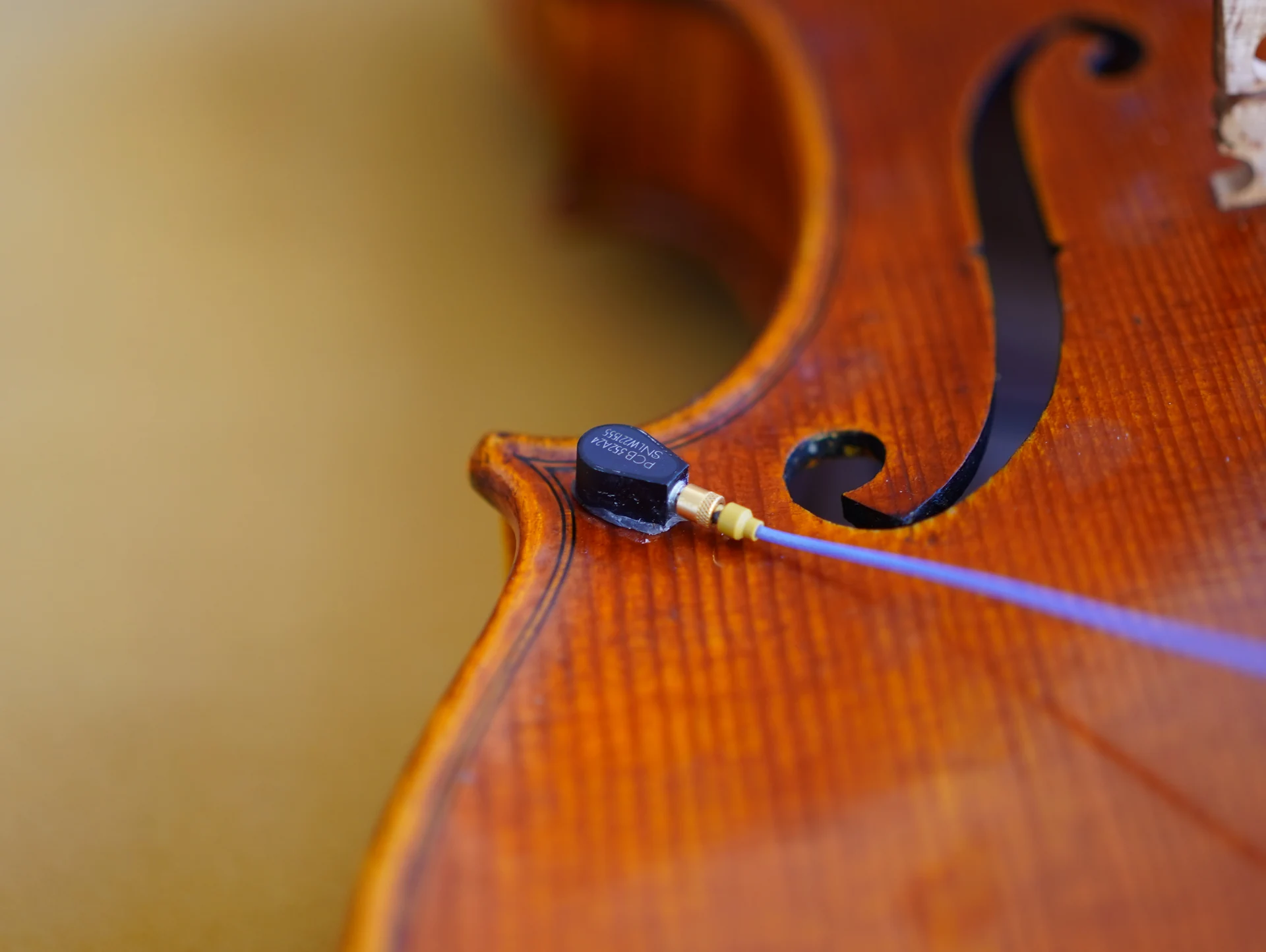
I measured responses at locations across the top plate and used impact-hammer and string excitation to examine different parts of the response. Accelerometer measurements described local structural motion; microphone measurements described the sound produced by that motion.

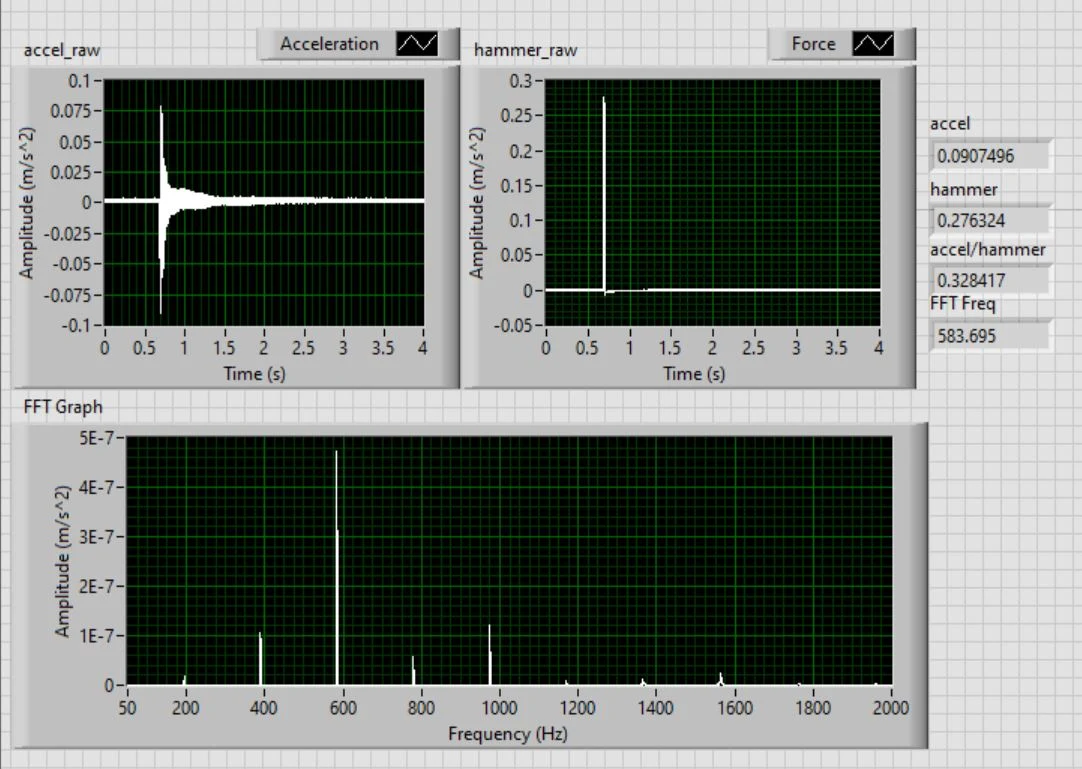
Fast Fourier transforms were central to the analysis. I compared frequency spectra, harmonic magnitudes, and spatially averaged responses, and examined how acoustic measurements changed with microphone distance.


Measured responses

The two instruments showed differences in the strength and distribution of their frequency response. In the thesis comparison, the higher-priced instrument showed stronger lower-frequency harmonic response in the middle region of the top plate, and its acoustic response more closely followed the equal-loudness comparison used in the study.
Measurement conditions
Instrument support, excitation location, and sensor placement affected the measurements. I distinguished local body vibration from radiated sound and compared the instruments under controlled excitation.
Structural Properties and Perceived Acoustic Quality of Modern Violins.
Alan Pham. MS thesis, California State University, Long Beach, 2022.
